The Media Source
5 min read
Beyond the Walled Garden: Why the Friction Is Human, Not Technical
Published on
Metrics that actually matter
Ask Darren about the biggest shift in the industry, and he goes straight to signal. Supply-path optimization, degrading identifiers, and the slow erosion of legacy measures like click-through rate and view ability mean the old proxies for success no longer carry the weight they once did. In their place, brands and agencies are gravitating toward metrics that reflect real value: attention, engagement, and creative optimization, the things that translate into a defensible return on ad spend for the CFO.
The catch is that chasing those richer metrics usually means stitching together more tools. Darren’s point, and one that sits at the heart of what Camphouse believes, is that the goal should be a holistic ecosystem where technologies talk to each other, not a scavenger hunt across a dozen vendors to make a single plan work.
The pull away from walled gardens
That naturally leads to interoperability, a favorite topic at Camphouse. Darren frames the problem plainly: the space is complex, and the effort to demystify it has left the industry leaning too heavily on walled gardens. Meanwhile, there’s what he calls a “cornucopia” of vendors, each with genuinely unique strengths, sitting just outside those walls.
Interoperability, in his words, is about learning to speak a similar language, finding partnerships and seamless integrations that give clients and agencies a simplified solution, so they don’t need fifteen or sixteen vendors just to get a plan executed the way they want. Agencies, he argues, are actively crying out for creative alternatives and extensions beyond the walled gardens: options that enhance performance, lift attention, and provide the incremental gains that stronger benchmarks demand.
The friction is human
Here both agreed. The technology is rarely the blocker anymore; modern platforms are built with open APIs, bidirectional connections, and connectivity in mind. The friction comes from people.
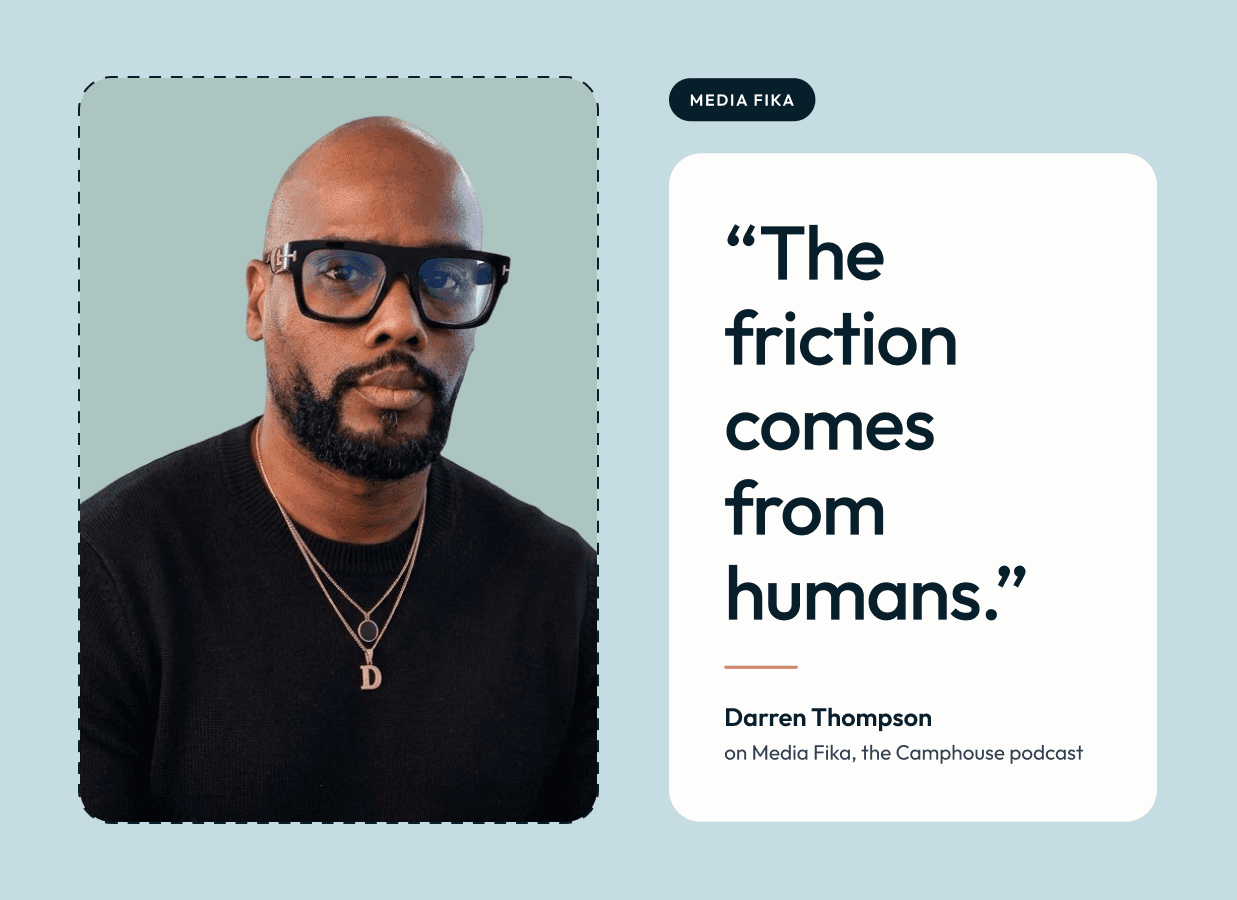
“The friction comes from humans… It’s their own agendas, not looking outside of their own initiatives to recognize you’re in partnership.” — Darren Thompson
Michael put the tension honestly: a platform owner spends blood, sweat, and tears building a full, end-to-end product, and then someone arrives wanting a digital handshake that trims away part of what they built: “we love what you do, but we don’t need all of it.” The unlock, Darren suggested, is respect and a shift back toward client and business outcomes: understanding what a partner’s ecosystem does well, and extending it rather than competing with it. It even means vendor-to-vendor collaboration, combining powers, “like Captain Planet,” to deliver something bigger than any one platform could alone. And in an attention economy, the metric worth optimizing for is time spent with a brand, not merely time seen.
What great collaboration looks like
For Darren, real collaboration starts from the mission and works backwards: early access, the right partners, and a clear view of the data, assets, and creative in play. It has to be open, vulnerable, and safe, a space to push ideas without shoehorning your own solution as the only answer. Being cc’d on an email after the fact, he noted pointedly, is not collaboration.
He was just as passionate about who gets a seat at the table. There’s enormous talent at the mid- and junior levels, the people at the coalface, whose perspectives rarely reach high-level partnership conversations. Raising them up, giving them a voice, and opening doors for the next generation matters, especially as the industry has lost some of the easy on-ramps it once had.
Five years out
Looking ahead, Darren sees agentic and AI systems taking center stage, and the questions that come with them: how are they differentiated, how do they talk to each other, how unified is the language, and how responsibly is the data used? His throughline is simplification: cutting through the complexity of the programmatic ecosystem so teams can focus on the metrics that matter. Or, as the two joked, being able to explain what you do to your nan in a lift in five seconds. His one fix for the industry? More access, and more active listening to the partners who are rich in expertise.
Key takeaways
Legacy metrics are fading — attention, engagement, and creative optimisation are the measures that tie to real ROAS.
Interoperability means speaking a common language, so teams aren’t forced to juggle 15+ vendors to execute a plan.
The tech is ready; the friction is human — collaboration needs respect, vulnerability, and a focus on client outcomes.
Real collaboration is about access and who’s in the room, not being cc’d after the decision’s been made.
Raising up junior talent and diverse voices strengthens the whole ecosystem.
The future is agentic — and its promise is simplification, not more complexity.
Listen to Media Fika. Catch the full conversation with Darren Thompson on Spotify and wherever you get your podcasts, brought to you by Camphouse, the intelligent media operations platform for modern media teams.
Related posts


